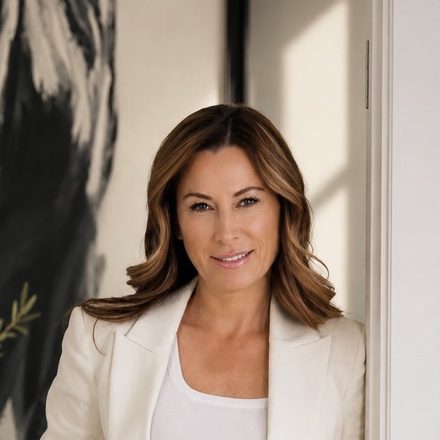
Machine transcript of a phone recording of Spotify playback (the original audio files are no longer available). Lightly corrected; speaker labels and a few names are best-effort, and anything marked [unclear] or [unverified] needs a listen. Timestamps are from the start of the episode. In fast back-and-forth, short replies are sometimes folded into the other speaker's paragraph.
[0:00] ALEXIS MICHAUD: Welcome to Grit, Grace and Leadership, a podcast aimed at helping girls, tweens, and [teens reach] their full potential. As Melinda Gates has so eloquently highlighted, from our televisions to our textbooks, the stories we're told about power and influence almost always center on men. We believe that it is hard to become what you can't see. Our hope is that anyone listening feels inspired, sees a path forward to a life they find fulfilling, and in the process remembers that nothing is impossible. You will hear on the show that each of these women These women have been knocked down. They come from varying backgrounds. But what they have in common is their grit, grace, and leadership. They've created lives that many only dream of, and they're doing it their way. Today we have on the show Tara Young, Senior Attorney for NV Energy. Welcome to the show.
[1:28] TARA YOUNG: Thanks for having me.
[1:30] ALEXIS MICHAUD: So Tara, you, as I told you earlier, you're a little bit of my guinea pig. You're the first of a series of guests on a new show that we're putting together called Grit, Grace and Leadership about women leaders in the city, in the state, in the country and around the world. And your story is awesome.
[1:48] TARA YOUNG: Oh, thank you.
[1:50] ALEXIS MICHAUD: So we're going to start with the same question that I've asked everybody on the last podcast, which is or similar. How and where did you grow up?
[1:59] TARA YOUNG: I grew up in Washington state. My dad is a nuclear engineer. So we bounced around the power plants and I ended up in high school in Yakima, Washington, which is a small town on the east side of the state. And especially coming from the big metro west side, it was as rural and depressing as Yakima, Washington sounds.
[2:19] ALEXIS MICHAUD: Oh no.
[2:20] TARA YOUNG: But it actually forged really close friendships with my high school friends because we were like the 30 honors students that wanted to get the hell out of Yakima, Washington. And we are still very close to this day.
[2:34] ALEXIS MICHAUD: How big was your school?
[2:35] TARA YOUNG: My school was actually about 2000 people, but I was in this honors program. And so I just saw the same 30 kids in every single class. So it really formed a bond.
[2:45] ALEXIS MICHAUD: What did you know about your dad's career?
[2:48] TARA YOUNG: Nuclear engineer. We knew a little bit. He would take us to the power plants when we were kids. And we were very proud of the fact that we knew that the emissions coming from the tower was steam and not smoke. So we would correct everyone who dared to say that it was smoke instead of steam. We thought we were very knowledgeable. But at the time we didn't really understand what he did. All of it.
[3:14] ALEXIS MICHAUD: You know, it's interesting in light of, I knew nothing about nuclear energy other than I was afraid of it, right? The words, just think what the heck, and then you see the meltdowns of these power plants. But then I watched Inside Bill's Brain, the documentary on Bill Gates, and learned so much more about nuclear energy, and I'm not like advocating for it, but it educated me that it's inexpensive, and there is a possible way to do it it's not dangerous and we need clean energy.
[3:42] TARA YOUNG: Exactly. You can get it clean.
[3:44] ALEXIS MICHAUD: So is your dad still in that business?
[3:45] TARA YOUNG: He just retired about two years ago, but now he's consulting part-time for the same position that he had.
[3:50] ALEXIS MICHAUD: So genius.
[3:51] TARA YOUNG: Yes, he has a good gig going on.
[3:53] ALEXIS MICHAUD: I love that.
[3:54] TARA YOUNG: Yeah.
[3:55] ALEXIS MICHAUD: Okay, so we're talking about your dad, but who has been the most influential person in your life up to this point?
[4:02] TARA YOUNG: So that's actually my husband Justin and it's a very cute story because my dad and his dad both work together. They were nuclear engineers. And our moms became good friends when we were about three and five, respectively. He's two years older than me. And when his mom went back to school, my mom ran an in-home daycare. So he was in our house a lot and we essentially grew up together. And then when I was 10 and he was 12, our dads were laid off from the same job. And so they ended up moving back east and then to the Midwest for a bit, they landed in Phoenix. And we had a few family trips together through that time. And so, of course, I developed a raging crush on him, which was not returned because I was the quintessential nerd with braces and big hair and the whole nine yards. And he was Mr. Suave track star and band star, and all the girls were like, swooning over him. So then fast forward to college, he had actually been engaged to a different woman. And one day my mom calls me and she said, you'll never guess what happened. And I said, oh, do tell. And she said, Carrie, that was her name, broke off the engagement. And I was like, oh, that's so sad, but not really.
[5:25] ALEXIS MICHAUD: Right.
[5:26] TARA YOUNG: And then my mother, who is not really a technical person was like, you should email him. And I was like, oh, that's a really good idea. And this was 1999. So email was sort of like brand new.
[5:36] ALEXIS MICHAUD: Brand new.
[5:38] TARA YOUNG: So he was finishing up college at Northern Arizona University and Flagstaff. I was in Boston working after college. So we started emailing and kind of reconnected. And then I came out to Phoenix for sort of our first date slash let's see if this is going to work. And we knew right away that we were kind of meant for each other. So we dated for a year and then we were engaged for a year and then married in 2002. So we've been together almost 20 years and married for 17. So-
[6:14] ALEXIS MICHAUD: Holy cow.
[6:15] TARA YOUNG: Yes.
[6:16] ALEXIS MICHAUD: Now what does your husband do?
[6:16] TARA YOUNG: So he's a mechanical engineer and he can be a bit of a Vulcan sometimes, but the reason he's so influential in my life is that he pushes me to be the best version of myself and he'll let me cry on his shoulder for a while, but then he's like, what are you gonna do about it?
[6:35] ALEXIS MICHAUD: Get back up.
[6:36] TARA YOUNG: Get back up, and that's, I think, the real, the main reason I named him as the most influential, because I feel like he's really pushed me to do new and hard things.
[6:46] ALEXIS MICHAUD: Be the best version of yourself.
[6:47] TARA YOUNG: Yes, exactly.
[6:48] ALEXIS MICHAUD: Which is an amazing, amazing person. So, you've been a lawyer now for?
[6:54] TARA YOUNG: 15 years.
[6:56] ALEXIS MICHAUD: Okay.
[6:56] TARA YOUNG: Just had my anniversary in October.
[6:58] ALEXIS MICHAUD: Okay, and what drew you to law? You've got this engineering background, you get married to an engineer.
[7:05] TARA YOUNG: So coming from an engineer and married to an engineer, I did think that I would be an engineer and I was actually quite good at math and still am. But I have no spatial recognition or ability to do physics. And once I hit those kinds of classes and started getting Fs instead of As, I was like, maybe a different career path.
[7:25] ALEXIS MICHAUD: It's a sign.
[7:26] TARA YOUNG: Yes, and then my husband likes to joke but if I designed a bridge, it would fall down. So-
[7:31] ALEXIS MICHAUD: That's not very nice, Justin.
[7:31] TARA YOUNG: No, it's not.
[7:32] ALEXIS MICHAUD: Okay.
[7:33] TARA YOUNG: Probably true. So because I like to read so much and I always did better on like kind of verbal testing, that drew me towards either like law or business. And then I worked for two years after college in a business research capacity. And so that solidified that I didn't want to go to business school, but I, and I did want to go to law school, but I didn't want to do straight out litigation. I wanted to do more transactional business focused work.
[8:02] ALEXIS MICHAUD: So what do you mean it's solidified you didn't want to go to business school? What about it? How did you know?
[8:08] TARA YOUNG: I just felt like the business side of it, whether or not to market a particular product or service, read financial statements, it didn't jazz me. Me. Okay. But sort of the legal side of it, which is, you know, how do you set up that relationship in the first place? What happens when it goes wrong? That drew me more to that, to the law.
[8:39] ALEXIS MICHAUD: To the law. But you knew litigation wasn't for you. And how did you know that?
[8:43] TARA YOUNG: I'm not really a combative person. I don't get, okay, I don't get adrenaline high off of, you know, quote unquote winning. And so business law is much more collaborative. You can definitely have disagreements, but usually everyone's trying to work towards a common goal.
[8:58] ALEXIS MICHAUD: Totally, close the deal.
[8:59] TARA YOUNG: Yeah, and that's much more my personality.
[9:02] ALEXIS MICHAUD: It's so interesting. And you said like, you're not combative, but you don't get a high off of winning. And that's what I always found was so interesting because Tara and I used to work in the same law firm and our, we had three floors in the building and our floor was the transactional department. I've always been a little bit more drawn to the litigators personalities and friendship because it's theatrics. And what would make me so uncomfortable. They don't bat an eyelash at. Like you think it's combative in how we would feel, but for them it really seems like theatrics. I mean, I don't know that it raises their blood pressure in any way, shape or form. It's a completely, they're different animals. I mean, we need them. But I agree with you, like it's not for me either.
[9:45] TARA YOUNG: It's not for me either.
[9:46] ALEXIS MICHAUD: So, what brings you, How did you get to Las Vegas? Because you're in Boston. He's in Arizona.
[9:54] TARA YOUNG: Yeah. So once again, the husband plays a starring role. So I was working in Boston, but I had applied and gotten into the University of Washington, which at the time was a top 25 law school. And also, I had in-state tuition. So amazing opportunity. Justin's plan was to apply for engineering positions with the multitude of companies that are in Seattle such as Boeing, Microsoft, yada yada yada. Well, instead of that, he gets offered a really amazing opportunity in Las Vegas. At the time, the Boyd School of Law had recently started. It wasn't accredited. It was meeting in some elementary school.
[10:34] ALEXIS MICHAUD: Oh yeah, on the Tropicana [campus], yeah.
[10:37] TARA YOUNG: With very small seats. So the whole thing sounded very bad and not something that I wanted to do. So Justin asked his future employer if they would be willing to pay for him to commute back and forth to Vegas. And they said yes, because they have – it's a small company and other people have a similar kind of deal.
[11:00] ALEXIS MICHAUD: Yeah.
[11:01] TARA YOUNG: And it actually worked out really nice. We had an apartment in Seattle. He rented a room from a friend here in Vegas. And he'd fly down early Monday morning and come back late Thursday night.
[11:11] ALEXIS MICHAUD: Yep.
[11:12] TARA YOUNG: And we didn't have kids. So I could just concentrate on school during the week. He could concentrate on his job and then we had, you know, our fun time on the weekend. And also because we were dating super long distance, it was kind of nice to go kind of to an intermediary point where we weren't together all the time.
[11:28] ALEXIS MICHAUD: You know, that's fascinating because I have a little bit of a similar story. I met my husband this January of my senior year at college in Oregon.
[11:38] TARA YOUNG: Okay.
[11:39] ALEXIS MICHAUD: And then I decided to go to law school, but I hadn't prepped for the LSAT or anything. So I took a year off. Actually, I went I went to work for I thought maybe I'd be a money manager Okay, so I worked for American Express Financial here in town briefly and went nope I don't want to do this And I have more of a background on that too where I worked for a financial services company for a year before that but Anyways, we took a year off. So we went back and forth seeing each other every couple of weeks and Then I applied to law schools and ended up going to school in California But I was two hours away from him and it was perfect not because I don't want to see him But I went to school Monday through Thursday and then I saw him on the weekend and law school is no joke You don't need a distraction. Mm-hmm. And so I thought it was perfect. Yeah, I was it was just ideal
[12:28] TARA YOUNG: Mm-hmm. I would agree. Yeah, so
[12:31] ALEXIS MICHAUD: Okay, so that really worked out and you were at the University of Washington, which is a phenomenal school But then the deal was when you graduated that you guys were gonna relocate here
[12:40] TARA YOUNG: Yes, so I actually clerked both summers down here so we okay and then The hope the plan from the beginning is that I would take the bar in Nevada Which I did and then started my career with Kummer Kaempfer as you well know in 2004 And then and we've been here full-time ever since okay, okay so
[13:03] ALEXIS MICHAUD: You know what? I you know the next question. I'm gonna ask you but I do want to give a little bit of color to this so You you've explored different paths for work. You figured out what was for you and what wasn't for you You were thoughtful about that. You didn't get trapped into some sort of path. That wasn't a good fit I think I hear a lot of stories about well my mom or my dad was the engineer and I was gonna be an engineer and instead of Fighting through it. I'm sure you could have lifted that grade in physics, you know, but to the fighting through it Nope, you were gonna lean towards your Assets, which is at that age. I think that's pretty impressive I don't know that most kids, because that's what you were, would figure that out. And then, but you still want a husband in that part of your life, and your career has just climbed and climbed. Talk to me, if you're willing to, about your kids.
[13:56] TARA YOUNG: Yeah, I would love to. So I have five children, and we have, quote unquote, acquired them in a variety of ways. My son is 13 and we had him kind of, we were, you know, I was 28. There weren't, we got pregnant right away without any issues, had him, you know, just the good old fashioned way. And then we decided that we wanted a second and unfortunately I had something called secondary infertility which is basically couldn't get pregnant, no one really understood why.
[14:30] ALEXIS MICHAUD: Yep.
[14:31] TARA YOUNG: And we always had a heart for adoption, so that drew us to becoming licensed. Well let me back up. Generally speaking, if you want to adopt, you can go through a private agency which costs quite a bit of money or you can be a foster parent with the hope but not the guarantee that you can adopt a child that comes into your home. So since we weren't rolling in cash, we decided to do the foster care route and we We also wanted to give back to the community. So we became licensed foster care parents in early 2009. And at the time we said that we weren't going to take a young infant because daycare only starts at six weeks and I was gonna keep working. But then the economy crashed and you and I both got laid off in February of 2009. And I think three or four days after we got laid off, got a call from CPS saying that there was a four-day-old baby girl at UMC and did we want her? And we had to decide within like two hours. So I called Justin, said, want a baby? And he said, okay. So we would literally like stop by Toys R Us, got a car seat, went to the hospital, and that's how we started our journey with Breonna, who's now 10. And it took about two years for the adoption to finalize. She never left our care, but we had a lot of contact with her birth parents. That was obviously hard because you never knew from day to day what was going to happen. Is she going to stay?
[16:08] ALEXIS MICHAUD: Yeah.
[16:09] TARA YOUNG: We have an open adoption with her birth father. We have a little bit of email and picture contact with him. We mostly lost contact with her birth mom pretty quick. It was not her birth mom's first child. She had her issues that she needed to deal with. So then we decided we wanted the third child, but we were a little burned out on the whole foster care thing.
[16:35] ALEXIS MICHAUD: Yeah.
[16:36] TARA YOUNG: And at the time I'd gone back to work for a company called Diamond Resorts, which, thankfully, I had a very nice financial package. So we were then able to afford the private adoption fees. So we went with a private agency in Florida that some friends had recommended, and we were matched with a birth mom who just basically was pretty young and didn't have the resources to raise a child. And the really neat story there is when we were first assigned to her, she was in Jacksonville, Florida. I didn't know a soul in Jacksonville, Florida. And the way if you adopt babies across state lines, you have to go through this process called ICPC. Okay. And essentially the state of Florida has to tell the state of Nevada that it's okay for you to travel with the baby. Okay. That can be as little as 10 days and as much as a month. Okay. So I was facing the prospect of being in a hotel room with a newborn for up to about five myself. Oh man! And two other kids at home. Right. And Justin trying to keep the other ones sane. But then my very good girlfriend from College, the same one that now lives in Westchester. Her husband actually got a job in Jacksonville, Florida, and so I was able to spend that time with her in a home, hanging out with a good friend.
[17:57] ALEXIS MICHAUD: And how long did it take?
[17:57] TARA YOUNG: It took about 10 days, so it wasn't too bad in the grand scheme of things.
[18:02] ALEXIS MICHAUD: So that's kiddo number three?
[18:06] TARA YOUNG: That's kiddo number three. So come home with her, and then because I'm completely wackadoodle, I convinced Justin to go for kiddo number four. By this time we were over adoption of any shape or form so we decided to do IVF which is basically a medical way to help you get pregnant. Thankfully it worked the first time so that's how I got pregnant with Tabitha who is now seven. And so we had our our four kids and that continued for quite a while.
[18:38] ALEXIS MICHAUD: And the whole time you're a lawyer.
[18:38] TARA YOUNG: Yes.
[18:38] ALEXIS MICHAUD: Justin's the engineer.
[18:38] TARA YOUNG: Yeah.
[18:38] ALEXIS MICHAUD: You guys are both full-time working parents, but providing a very loving home for these four kids.
[18:43] TARA YOUNG: Yeah.
[18:50] ALEXIS MICHAUD: You've got a six-year-old at the time
[18:53] TARA YOUNG: When Tabby was born, when the caboose comes.
[18:53] ALEXIS MICHAUD: Okay.
[18:53] TARA YOUNG: Yes. Yeah, so fast forward Tabby was six Ruth turns seven we were done having kids. We got a puppy I'm ginger who's now a year old and a year ago, Halloween, I woke up, well let me back up, you know, so throughout this whole span, you know, we weren't really being that careful with because of birth control because for obvious reasons, we couldn't get pregnant to save our life for 18 years.
[19:31] ALEXIS MICHAUD: Right.
[19:32] TARA YOUNG: So, and I was 40 at the time. So a year ago, Halloween, I woke up just not feeling well and I like dragged myself to work and I went home and took a nap and still felt awful and I realized I hadn't had my cycle in a while so I was like well let me just go rule it out so go down to the pharmacy get the test the first one was like super inconclusive and I was like what does that mean? Just says maybe. Yes yeah I go back to the pharmacy I get like a different kind of test because clearly I'm incompetent at reading pregnancy tests, but this one was like plus minus and it turned plus like instantaneously and I was like, oh my goodness.
[20:13] ALEXIS MICHAUD: Right?
[20:14] TARA YOUNG: So, and it took me a few days to tell Justin because I was afraid that he would either divorce me, murder me or do both.
[20:22] ALEXIS MICHAUD: Oh no.
[20:23] TARA YOUNG: Because he did not want more children. So thankfully he took it in stride and our newest addition, baby Abigail was born in June of 2019. So and she's a doll. So now we have five, but we are very, very, very, very, very much done.
[20:39] ALEXIS MICHAUD: I believe it. I believe it. I, so many of my friends have four or five kids. And when you have the two working parents and very demanding careers, I literally don't understand how it works. Like I cannot get my head around it. I think the two of you are amazing. And I know you provide such like a completely loving environment. So I just think it's impressive. And so that's a huge part of your story. I guess for anybody out there who thinks I'm a mom, I have a lot going on, I can't do it. That's not necessarily true. It's just not. So I want people to hear that. So my next question for you is just in life and getting to where you are now, what roadblocks got in your way and how did you navigate them?
[21:26] TARA YOUNG: Well we touched on the law school thing, which is I think, you know, instead of, instead Instead of going to a school I didn't want to go to or giving up on my dream, you know, Justin and I made it work for those three years that I was in Seattle and he was in Vegas. And I think that's the key to almost any roadblock is thinking creatively and trying to figure out a different path around what is blocking you. And then with the kids, you know, they all go to like a [Christian school, name unclear], which has been an invaluable part of our life because they have daycare that starts at six weeks and they go all the way through high school. And they're all at one school. And they're all at one school. So only have one pickup and one drop off. And the environment is very loving and caring and, you know, Christian based, which we really appreciate.
[22:16] ALEXIS MICHAUD: Right.
[22:17] TARA YOUNG: So that's been a huge help in our lives. And then we've had a variety of different, you know, nannies, drivers, you know, you name it in terms of help. And I think that's something especially for women is you may be responsible for getting a task done, but that doesn't mean you have to do it. So don't be afraid to outsource.
[22:42] ALEXIS MICHAUD: And that I'm going to quote, that we push this on social media. Yeah, that is the truth. How long did it take you to realize that?
[22:46] TARA YOUNG: It took me a while. I would say probably the first couple of kids I really because my mom was a homemaker. And And so it was a little...
[22:56] ALEXIS MICHAUD: That's your example.
[22:57] TARA YOUNG: Right. So it was hard for me to let go of that, you know, Susie homemaker vision that I have to be that plus an attorney.
[23:07] ALEXIS MICHAUD: Right.
[23:08] TARA YOUNG: And, you know, at some point you realize that you just can't do everything. There's only so many hours in a day.
[23:14] ALEXIS MICHAUD: I don't remember her name, but I think she was one of two female partners when we were in Kummer Kaempfer. I just remember I can see her clear as day standing in my doorway. Her husband was a heart doctor and she had at least three kids. And I said to her, I was pretty young, how do you do this? And she said, I outsource everything. Not time with her children, but the administrative, which we don't have to be administrators. If you, and not everybody gets this luxury, I'm very, very well aware of that. But she outsourced the drop off and pick up of the dry cleaning, the grocery store, the bills go on automatic payment. At the time, I imagine she's a travel agent to have to figure out any of her travel. And then you can carpool. Stay at home moms that are super duper busy. They carpool. They don't have to be the one to pick up and drop off every single day. I just literally was having this conversation last night that in a former life, I have staff, I had an assistant at work, I had a part-time personal assistant at home, I had babysitters that helped, this, that, and the other. And I mean, I know some people are going to get really mad at that, but that it's maybe not, I know it's not available to everybody or that somehow like we're failing, but it's ridiculous to think you can get it all done. You have so much more sanity if you can outsource it. And there was a time where to have that help, we couldn't vacation, we drove our cars 200,000 miles, it was a trade off to get that done. So I just, for the adult women listening, just let go of the expectation you're supposed to do everything.
[25:04] TARA YOUNG: Exactly. It's just outrageous, but yeah, it took me a long time to get there too, because you want to do so many of those things, But eventually you start to realize, like, though it depends, going to the grocery store is not my highest and best use. I don't need to do this.
[25:19] ALEXIS MICHAUD: Yeah.
[25:20] TARA YOUNG: So. But I will say something that I read somewhere that's helped me is figure out what is valuable and makes you happy and then kind of outsource from there. So for example, I actually like grocery shopping, I like it.
[25:36] ALEXIS MICHAUD: Okay.
[25:37] TARA YOUNG: And so it's not my highest and best use, but that's part of the weekend that I enjoy.
[25:42] ALEXIS MICHAUD: But it brings you joy. So for me, doing meal prep is something that I do enjoy. I hate cleaning my house. I've had a cleaning lady since the day I passed the bar, and I will never ever get rid of her. So for each person, it's different. And so I think taking some time to reflect on this is what I enjoy and want to put my time into, this is what I don't enjoy, or it doesn't make sense to put my time into. And then from there, try and find tools to to accommodate those. It's the same thing at work. As you find the ladder eventually, you have to figure out, like, I don't enjoy doing this, but this person does. Go ahead and do it. I mean, it's, but it takes, I don't know, I feel like it takes a long time to figure that out and get there. Oh, it's so funny. So I send out questions ahead of time, right, to all the guests, and here I see you said, with that question that you have come to accept, never watch TV again. Yes. It's because you just got so much going on. So based on your experience so far, is there anything that you aspire to in your next chapter?
[26:48] TARA YOUNG: Yeah, I always like to have goals. So in law, kind of, so I work what's called in-house, which means you work directly for a company, and sort of the pinnacle of that career as being something called general counsel. So that's definitely something I want to work towards. I would I don't want to be general counsel of some huge company with you know 15 lawyers under me. I'm looking more for a smaller company that needs one to two attorneys or perhaps they've never had someone in house before because that's a skill set that I think I would be good at it and bring to the table.
[27:29] ALEXIS MICHAUD: And you'd have your hand in everything.
[27:29] TARA YOUNG: Yeah.
[27:34] ALEXIS MICHAUD: Because small like that you would learn about marketing you know, you would see everything
[27:40] TARA YOUNG: Okay, and work directly with the C-suite which would be What I'm aspiring to? But I am very happy at my current job and it's very good for our family life So we'll see, you know at what point that makes sense to really pursue.
[27:53] ALEXIS MICHAUD: Right. Well, talk about your current job. What do you do for NV Energy?
[27:53] TARA YOUNG: So I I review and negotiate all of the procurement contracts. So anything that the company buys, my joke is toilet paper determines. So some contracts can be very high dollar figure, high risk, others are just much more run of the mill. In addition, I do all our financing. So just like you have a mortgage on your house, a company usually has a mortgage in what's called a bond. And we refinance our bonds every year the same way you might refinance your mortgage because the interest rates went down. So I do that. And then I've gotten more into data privacy and cybersecurity, which is a growing concern for all companies. So I'm...
[28:42] ALEXIS MICHAUD: Don't you think that's interesting?
[28:43] TARA YOUNG: It is interesting.
[28:44] ALEXIS MICHAUD: I found it very interesting. I did a lot of that at IBM. And then watching what the European Union does, and then California seems to be the first in the states to follow it. And I think it is fascinating.
[28:57] TARA YOUNG: Yeah, and it's just going to grow. So it's definitely an area of the law to be totally up on.
[29:02] ALEXIS MICHAUD: It's required.
[29:03] TARA YOUNG: Yes, for sure. And then lastly, I've gotten a little more into our federal regulatory issues. There's an administrative department called the Federal Energy Regulatory Commission. It goes by FERC for short. And we have to do certain administrative filings in front of them. So I'm working on what's called a rate case right now. And that's totally new to me, which I enjoy the variety, but some days I feel like my head's gonna explode because I'm looking at a contract, then I'm looking at a FERC filing, and then I'm looking at a financing document.
[29:40] ALEXIS MICHAUD: That's in-house.
[29:41] TARA YOUNG: Yeah, that's in-house, which again, I enjoy and that's why I like it.
[29:45] ALEXIS MICHAUD: At least you're not sedentary.
[29:46] TARA YOUNG: Yes.
[29:47] ALEXIS MICHAUD: I that is that is the reason why I loved in-house was I always got to learn something new and most of the time it was complex and you get really far into it and you have to scale it fast. Yeah. And I loved it. I mean, it was a whole different when I was with IBM, I looked at the entire world differently. I could see software everywhere. I looked. I knew that it was running the water systems. I knew, you know, about the airport. I knew about Disneyland. These things. And then when I worked for a data center company, I learned so much about energy, cybersecurity, these sorts of things. And so then I looked at power lines differently. And you know, it just, I would be driving through the desert going to California and I would look at everything differently. So I love that about in-house, but it does. If you don't stop learning, you often feel like your head's gonna explode. You feel tired. But the alternative seems so dreadful.
[30:46] TARA YOUNG: Yes, I would agree.
[30:47] ALEXIS MICHAUD: Okay, okay. I'm sorry to cut you off. I get so excited about learning new things. Okay, so with that, then you would like to make that next step to get to general counsel and then stay there for a long time.
[30:57] TARA YOUNG: Yeah.
[30:58] ALEXIS MICHAUD: Which is, what I think is interesting too is I'm reading more often that a lot of lawyers go from general, not a lot, it's just becoming more common, general counsel to CEO.
[31:09] TARA YOUNG: Yeah, it happened in our company. Doug Cannon who hired me was the GC at the time and now he's the CEO of the entire company. So I think the C-suite is recognizing that lawyers have a really good skill set in the CEO position because if they're good, they understand the business issues, they're able to make business decisions, but they also have that risk mitigation hat all the time as well. They're not you know rushing into dangerous or ill thought out decisions.
[31:43] ALEXIS MICHAUD: Right. I think in the past people just looked at that as sales prevention. Right. And then as you get bigger and you got to put on the big girl pants, you have to have both at the same time. Right. You got top line growth, risk mitigation, it has to go hand in hand to have like a happy existence for your company and your shareholders and your public. So okay. So let's the next question is what has been the most pleasant surprise along the way and what lessons have presented themselves in the surprise of your career, your life.
[32:15] TARA YOUNG: So I think the overarching theme is that I've learned that I can do hard things. Like when I was growing up, academics came easy to me. And then, and so I never really, and I didn't put myself out there in terms of sports or other things where I might be challenged. And so I didn't have that kind of grit and perseverance from the get-go. But throughout my career being challenged as a young associate and then going in-house and then even in my current job, changing what I've done, you get those butterflies in your stomach but you just have to take a deep breath and dive in. And the worst thing is that you fail and you get back up the next day. But I think the area that it really hit home is that after my son was born, I got fairly into athletics and-
[33:11] ALEXIS MICHAUD: Fairly? She just finished the New York marathon, but we'll talk about that in a second.
[33:16] TARA YOUNG: Okay. So I started out running and then I got into triathlon. And then when I was 30, I said that I'd do a full Ironman by the time I was 40, which at the time seemed so far away. And, you know, and then I rapidly became 39 was like, oh crap, I have to do this. So it took a full year and I hired a coach and I trained and you know all of my athletic experience leading up to that definitely helped me and created a really good base. But I have a fear of open water swimming. I'm not the world's best biker and so I just...
[33:51] ALEXIS MICHAUD: Two of the three.
[33:51] TARA YOUNG: Yeah. So I really had to, you know, dig deep and believe in myself and practice things that were uncomfortable, you know, going out to Lake Mead every weekend and swimming and feeling like, you know, I was going to drown.
[34:07] ALEXIS MICHAUD: Right.
[34:08] TARA YOUNG: And getting over that actual fear, you know, was difficult. But I can say, you know, I did the Arizona, in 2017, I did the Arizona Ironman and I finished.
[34:21] ALEXIS MICHAUD: Congratulations.
[34:22] TARA YOUNG: Thank you. And I actually have a tattoo on my calf to remind me of that accomplishment and the fact that if I can do that, then I can do a lot of other things too.
[34:33] ALEXIS MICHAUD: Isn't that the truth?
[34:34] TARA YOUNG: Yeah.
[34:35] ALEXIS MICHAUD: So then you qualify for New York. You just ran it. Describe it for us.
[34:38] TARA YOUNG: Oh, it was amazing. You start in Staten Island and then you run through Brooklyn, Queens, the Bronx, and Manhattan and you finish in Central Park. And there are people cheering the entire way like you don't need music in any way shape or form. The weather was perfect. It was like 50 and sunny. I just couldn't have asked for a better race day. And also it was a big goal because I just had the baby in June. So yes, you know, I wasn't I signed up in January when I was pregnant because I wanted something to work, work towards after the baby. But after the baby was born that first couple weeks, I was like, Oh my goodness, what did I do to myself? But once again, you dig deep, you make a training plan, you stick to it, which includes getting up at four or five in the morning to run in the summer because it's frickin' hot outside.
[35:29] ALEXIS MICHAUD: And you have kids at home.
[35:30] TARA YOUNG: And I have kids at home.
[35:31] ALEXIS MICHAUD: I'm sure Justin is equally as helpful, but you have to go do these things when they're asleep.
[35:36] TARA YOUNG: Yeah, and then you don't get a nap.
[35:37] ALEXIS MICHAUD: No, there's nap time for adults.
[35:39] TARA YOUNG: Exactly. So, I mean, it's, again, it's not easy, but it's something that I wanted to do and I was willing to put in the work to make it happen.
[35:49] ALEXIS MICHAUD: So what do you think, Tara? You said academics came easy to you. You weren't particularly, you weren't challenging yourself too much as a kid, which I've seen both. I've seen the kids that are super duper duper driven and then they can burn out. You see the kids that are driven, that they stay driven and you see the ones who I think I was a lot like you, like academics, okay. But the other stuff I don't know that I necessarily had the grit to try and then I became extraordinarily gritty, right? Can you pinpoint like when or why? You started setting these huge goals that I mean at 30 to say you're gonna do an Iron Man. Mm-hmm I think that's unusual but then to actually start training nine years later. Right? You held yourself accountable. Mm-hmm a decade later, right? And then I I mean, you did two instead of just saying I'm just gonna run marathons all run ultra marathon right scared of the open water And I'm not a good cyclist, right? What was it that made you go, no, I'm getting this done?
[36:46] TARA YOUNG: I Think it grew out of the athletics like the first couple of races I did there was something just in me that didn't want it I Didn't want to give up and so like no matter or how much I heard or uncomfortable I was, I was gonna finish this thing. And I think that just kind of kick-started it and that bled over to a lot of different areas of my life.
[37:19] ALEXIS MICHAUD: I'll be so curious 10, 20 years from now to see your kids because this example that you're setting is so incredibly powerful.
[37:27] TARA YOUNG: Yeah.
[37:28] ALEXIS MICHAUD: And I don't think kids recognize until they become adults and then they have a lot of these same habits and then they go back to all my mom did it, and they think that it's normal when you're, you're like magnificent. People just don't, they don't do all of these things. They settle for far less, and you never seemed willing to settle in your life, from where you're gonna go to law school to all of it. So, okay, last question for you is, what do you know without a doubt?
[38:04] TARA YOUNG: So, I'm Christian, I'm very religious, I greatly believe that God is directing my path and has the best vision for me. You know, the fact that my best friend just happened to move to the same city where Ruth was born, you know, I could see God's hand in that too. And so, you know, walking through these years of faith, I really have come to a place where I know that God has what's best for me and I have to trust in His timing and it doesn't mean that I can't, you know, put feelers out there or make goals.
[38:43] ALEXIS MICHAUD: You have to put effort in.
[38:44] TARA YOUNG: Yeah. Yes. But, you know, if He's blocking something, it's for a reason and I trust that eventually it will come to fruition.
[38:51] ALEXIS MICHAUD: Isn't that the truth? I have had numerous experiences like that. One in particular, and I'll just share it because I want people to have an example too, is when I was with IBM, I got an email from one of my best friends from law school saying, do you want to come head the transactional department of our Las Vegas based office? There's no transactional lawyers and she was in California. And I got a pit in my stomach because I knew I was going to do it, but I didn't want to. And then when I went to interview and the elevator doors opened onto the floor of the law firm, it was gorgeous. And I literally thought, I'm going to work here. But I kept walking forward because I could feel a hand leading me like, this is good for you. Here you go. And that position led me to Switch. Too soon. That was, I've had two sleepless nights. Not too soon. It was the right timing. Like, oh dear. I had two sleepless nights in my life and that was one of them. When I had only been with that firm for, I don't even remember now, eight or nine months, but I became much more present in the community and I got on the radar of Switch. And then I end up going through the series of interviews when I didn't even, they weren't publicly advertising that they were hiring, they weren't public company yet. And I remember thinking like, the timing seems awful, but again with this hand and the ride at Switch was one of the best experiences of my life. Right. So learning to trust, even if you don't believe in God and it's the universe or whatever, learning to trust that like this is the right place and the right time for you, you're gonna have to work really hard, but keep moving. I think it's a powerful lesson for kids and adults. Yeah. Because if you don't keep yourself open to change, you're gonna miss the magic in life for sure is my opinion. So, Tara, I love your story. I have loved getting to know you and watching you the last, I guess it's been 15, has it been 15 years? Pretty close, because I feel like you started maybe a year after I started at Kummer Kaempfer or...
[41:04] TARA YOUNG: Yeah, soon.
[41:10] ALEXIS MICHAUD: Soon. And to go from like newer attorneys to parents to for you a triathlete and a family of five and everything that you do, it's been so fun to watch and you're 41?
[41:25] TARA YOUNG: Yes.
[41:25] ALEXIS MICHAUD: So I don't even think you're in the middle. You have a long way to go.
[41:30] TARA YOUNG: Thank you. I hope so too.
[41:30] ALEXIS MICHAUD: I think so. Tara, thank you for coming on the show.
[41:30] TARA YOUNG: Thank you for having me.
[41:30] ALEXIS MICHAUD: You're welcome. I just want to say thank you so much Tara for coming on the show, especially for being my guinea pig on this first episode. At the end of every episode we'll end with a quote and the quote today is, I would encourage you to set really high goals. Set goals that when you set them you think they're impossible, but then every day you can work towards them. And anything is possible, so keep working hard and follow your dreams.